


American Federalism: July in Review
Updated: Aug 3
Primary author: Noah Farnsworth
In This Edition
The Supreme Court and the justices’ evolving approach to federalism.

Introduction
American federalism is shaped by many forces, far from Washington: in state legislatures, in towns and cities, by citizens, through state and local agencies, intergovernmental organizations, and in hundreds of courts across the country. Most of the evolution of federalism happens in these routine, distributed settings. But federalism also continues to develop through a more concentrated and highly visible source: the United States Supreme Court. In this last term, the U.S. Supreme Court issued 66 majority opinions (resulting in 67 total case decisions). The Court heard a number of cases that directly address how power is allocated between state governments and the federal government. While few of these decisions constitute a sweeping shift for America's federal balance, a number of them have clarified important doctrines, partially resolved legal conflicts, and helped to set new legal baselines that affect how states - and citizens within those states - do their business.
This month, we look at a few of the federalism-related cases from the most recent term. We begin by looking at some macro trends, over the last 10 years. We then examine recent cases before previewing a new set of federalism cases already on next term’s docket.
Trends: 2016-2026
In October Term 2025 (OT 25), the Supreme Court gave opinions in 67 cases. Out of these 67 opinions, at least eight cases affect federalism directly. All of these are on the "Merit Docket," that is, cases where the Court does a full review of the legal issues, including legal briefs, oral argument, and opinion issuance.
The interim docket does consist of federalism related cases, but often these cases present issues that are not fully settled. The Court, in granting an order, does not reach any legal question or the merits of the claims brought by the individuals parties. Therefore, we felt it appropriate to exclude these from our analysis. A fuller coverage of these types of cases can be found here.
To help in our analysis of federalism cases over the last 10 years, we mapped out three primary criteria that helped identify such cases. We looked for opinions that met at least one of the following criteria:
Conflicts between state and federal law – cases where a state statute, regulation, or policy was challenged on the ground that it conflicted with a federal statute, regulatory scheme, or constitutional power (e.g., preemption, supremacy, commandeering).
Federal statutes affecting state authority – cases where the implementation or interpretation of a federal law would meaningfully alter, limit, or expand a state's traditional or concurrent powers.
State laws regulating core constitutional rights – cases where a state law governing fundamental civil liberties raised questions about the balance between state policymaking authority and federal constitutional constraints.
In short, we counted any case where the Court had to decide how power is divided between states and the federal government—whether through statutes, constitutional limits, or regulatory authority.
Below is a table showing an estimate of the number of federalism-related cases from the past 10 terms of the Court.
Using our estimate, the Court has heard an average of 13.5 federalism cases each term.
While these rough estimates do not tell us much about the significance or impact of the cases, they do present a generalized portrait of the ebbs and flows of federalism-related cases per administration. When administrations shift regulatory direction, states respond—sometimes aggressively—creating surges in state-federal litigation that feed the Court’s docket.
The Trump administration’s deregulatory posture generated more state challenges that elevated federalism cases through OT 21, while the Biden administration’s regulatory expansion shifted the litigation mix toward administrative-law and separation-of-powers disputes, reducing federalism’s share of the docket.
So what?
We see this as a reminder that while the Supreme Court's role in policing the boundary of federalism disputes has been minimized, according to much of current federalism scholarship, SCOTUS still plays a pivotal role as one of the key "safeguards" of the American federal system. This chart compares the number of federalism cases to the total number of cases per term.
Of course, whether these cases constitute a "rebalancing" of American federalism is another question, and open to debate. As noted in a recent Harvard Law Review article, the Roberts court does not appear, on the surface, to have taken upon itself a major project in judicial rebalancing of the federal system. However, the Roberts court has issued a number of important "state-strengthening" decisions, which suggest a real shift in the courts' attitude toward federal-state relations.
Case Summaries
We now take a brief look at the more important recent cases in the last term (ending around June 30, 2026).
1. Watson v. Republican National Committee [Election Laws]
Facts: Federal election laws set the Tuesday after the first Monday in November as election day for federal officers. Mississippi, like many other states, allows certain residents to vote in federal elections by absentee ballot. A 2020 Mississippi law required that these ballots be postmarked on or before the date of the election and be received by the registrar no more than five business days after the election. In 2024, the Republican National Committee sued the Mississippi Secretary of State, contending that federal laws prevent Mississippi from counting absentee ballots received after election day. They argued that the election-day statutes' use of the word “election” refers to two acts: ballot casting and ballot receipt. By setting the day for the election, the statutes set a time-restricted deadline for both, so Mississippi’s act of receiving absentee ballots after the election day conflicts with federal law.
Holding: In a 5-4 decision, the Court upheld the Mississippi law. Writing for the majority, Justice Barrett explained that the term “election” in the federal statutes has always indicated “the electorate’s choice of candidate.” She wrote, “an electorate’s choice is made when voting is complete, not when ballots are received.” Justice Barrett further explained that the statutes in question say nothing about ballot receipt and that Congress has not yet made that distinction as a matter of law.
Federalism: The plaintiff’s theory, which was endorsed by the Fifth Circuit, would have imposed a uniform national ballot-receipt deadline by reading “election day” to require both the casting and receipt of ballots on the same day. Congress retains some power over elections under Article I, Section IV, but this power has its limits and has not been clarified through subsequent legislation. States thus retain the primary authority over the mechanics of ballot casting and receipt. The majority opinion did point out some policy concerns brought up by the plaintiffs, such as voter fraud and election integrity, but noted that these have been and can be addressed by individual states, not the Court. Most notably, this ruling keeps in place around 30 state laws that allow for some form of absentee voting.
2. West Virginia v. BPJ [Transgender Athletes]
Facts: In 2020 and 2021, Idaho and West Virginia enacted laws—the Fairness in Women’s Sports Act and the Save Women’s Sports Act, respectively—prohibiting male students from participating on female sports teams. Challengers in both states are transgender females who sued their respective states alleging the laws are a violation of Title XI and the Equal Protection Clause.
Holding: In a 6-3 decision, the Court held that States “may maintain women’s and girls’ sports for biological females” and upheld the laws in both states. Writing for the majority, Justice Kavanaugh wrote that men and women have “inherent physical differences” that make sex distinctions in competitive sports, especially contact sports, necessary for safety and fairness. The Court noted that Title IX’s use of the term sex “cannot… be interpreted to refer to anything other than biological sex.” Because Title IX itself permits sex-based distinctions in athletics, a state may likewise bar male students from girls’ sports teams without violating the statute. On the Equal Protection claim, the Court held that states may make sex-based classifications in law if those classifications are related to legitimate state interests. Both Idaho and West Virginia say their stated interests are safety and competitive fairness, which the Court deemed legitimate interests in Equal Protection analysis.
Federalism: Although several states, beyond West Virginia and Idaho, have enacted laws barring male participation on female sports teams, others have adopted the opposite approach and permit such participation. As the majority emphasized, Title IX allows states to maintain sex-distinct teams; it does not require them to do so. The Court has not held that Title IX mandates a prohibition on male participation in girls’ sports. Viewing the case from a different lens, Justice Gorsuch noted in his concurring opinion that Title IX rests on the Spending Clause, meaning Congress can attach conditions to federal education funds that states must accept to receive them. States currently have broad room to regulate women’s and girls’ sports, but the Spending Clause framework means Congress could later impose stricter federal conditions that narrow that state discretion—shifting the balance of federal-state authority in this area.
3. Wolford v. Lopez [Second Amendment]
Facts: In response to a 2022 Supreme Court decision (see Bruen), Hawaii passed a law that prohibits firearms on private property open to the public without the express and affirmative consent of the property owner. Three residents of Maui County contend that this law violates their rights under the Second and Fourteenth Amendments.
Holding: In a 6-3 decision, the Court held that Hawaii’s law goes beyond the scope of the Second Amendment. Writing for the majority, Justice Alito wrote that the law “hobbles what the Second Amendment protects: the right of Americans to carry arms for self-defense as they go about their daily lives.” Justice Alito noted that any laws placing restrictions on firearm usage or carrying are "presumptively unconstitutional" and a state must prove, through historical analogies, that its restriction aligns with the original meaning of the Second Amendment. If and when a state fails to do so, that law cannot pass the high constitutional bar set by the Second Amendment.
Federalism: Wolford is another link in the now longer chain of Second Amendment cases heard by the Roberts Court. Previous cases, such as Bruen, restricted a state’s ability to draft and enact regulatory schemes because of a newly standardized Second Amendment view. Cases in which gun restrictions are upheld often come from federal statutes rather than through experimental state laws (see US v. Hemani).
Professor Akhil Amar had this to say about this phenomenon:
“The danger is that once a particular government practice has been invalidated by judges, the practice will wither away and remain forever off-limits, even if a broad swath of Americans would like to see the practice revived at some later point.”
Hawaii noted many times in their briefs and at oral argument their state's history and legislative interests in gun control. Hawaii has some of the strictest gun control laws in the country and understands itself to have state constitutional authority to implement regulations according to the will of the people.
In judicial federalism, the idea of concurrent constitutional powers is quite common. Many states modeled their own constitutions to mirror the protections given in the federal Constitution. The mirrored language allows a state to set a foundation of protected rights and then expand those to unique areas (i.e. abortion, education, environment). A person is protected by both constitutions. However, when a state constitutional statute contravenes the federal Constitution, the latter will always retain authority. Justice Alito noted this in his opinion: "Merely local attitudes can neither shrink nor inflate the meaning of fundamental Bill of Rights guarantees that apply to the States through the Fourteenth Amendment."
4. Louisiana v. Callias [Voting Rights Act]
Facts: In 2022, the Louisiana Legislature adopted a congressional map with one majority-Black district out of the six districts allotted to the state. A group of Black voters sued the state arguing that the 2022 map violated Section 2 of the Voting Rights Act. A federal district court agreed with the plaintiffs and barred the state from using the map in future elections. Fast-forward to 2024: the Louisiana Legislature drew a new map, known as S.B. 8, which created a second majority-Black district. This time, a different group of voters sued the state arguing that this map was an unconstitutional racial gerrymander that sorted voters based on their race contrary to the Equal Protection Clause of the Fourteenth Amendment.
Holding: In a 6-3 decision, the Court held that Louisiana’s S.B. 8 map was an unconstitutional racial gerrymander and barred the state from implementing this new map in the upcoming 2026 election. Writing for the majority, Justice Alito focused primarily on the text and history of the Voting Rights Act. That act, according to the Court, guarantees voters, including minority voters, an opportunity to cast a vote for their preferred candidate, but the chances of success for that candidate may be affected by the variety of choices a state is allowed to make. The Supreme Court has not declared partisan gerrymandering unconstitutional, which has allowed states to redraw their maps for a variety of reasons–such as to protect incumbents or increase the number of seats held by a particular party. However, when a state has race as the “predominant” factor in drawing congressional districts, that "flies in the face of a colorblind Constitution."
Federalism: This decision added to the already hectic redistricting campaigns throughout the country. Right after the decision, the Alabama legislature met to redraw its congressional maps to eliminate one of the two existing districts where voters primarily elect Black representatives. This redraw was deemed constitutional by the Supreme Court in a short four-page opinion. Tennessee also redrew and passed a new congressional map–HB 7001–on May 7. Even before this decision, many states were in the midst of redrawing their maps. We covered extensively in our April issue, if readers would like more details.
5. Chiles v. Salazar [Free Speech and Conversion Therapy]
Facts: In 2019, Colorado adopted a law prohibiting licensed counselors from engaging in conversion therapy with minors. They defined conversion therapy as including “any practice or treatment… that attempts… to change an individual’s sexual orientation or gender identity or any effect to change behaviors or gender expressions or to eliminate or reduce sexual attractions towards individuals of the same sex.” However, the law explicitly allows counselors to provide “acceptance, support, and understanding for… identity exploration and development.” Ms. Chiles, a licensed counselor in the state, filed a lawsuit in federal court challenging the law under her First Amendment rights as it applies to her talk therapy.
Holding: In an 8-1 decision, the Court held that Colorado’s law, as applied to Ms. Chiles, regulates speech based on viewpoint and is contrary to the First Amendment right of free speech. Writing for the majority, Justice Gorsuch noted that the Court “has long held that laws regulating speech based on its subject matter are presumptively unconstitutional” and therefore trigger strict scrutiny, which requires the government to show that its restriction is narrowly tailored to serve a compelling government interest. Because the lower court failed to apply this scrutiny standard, the judgment was reversed and remanded for further proceedings.
Federalism: In the wake of the decision, the Colorado legislature enacted HB26-1322, which updated Colorado’s prohibition on conversion therapy to include viewpoint-neutral language, bringing the law into alignment with the Supreme Court’s decision. Some of the criticism around the Court’s decision came from Justice Jackson’s lone dissent. There, she raised concerns over the downstream effects of these decisions, especially for professionals whose work combines speech and conduct almost seamlessly. She raised concerns over whether a state could regulate any professional speech and how this might affect healthcare and medical professionals in certain states.
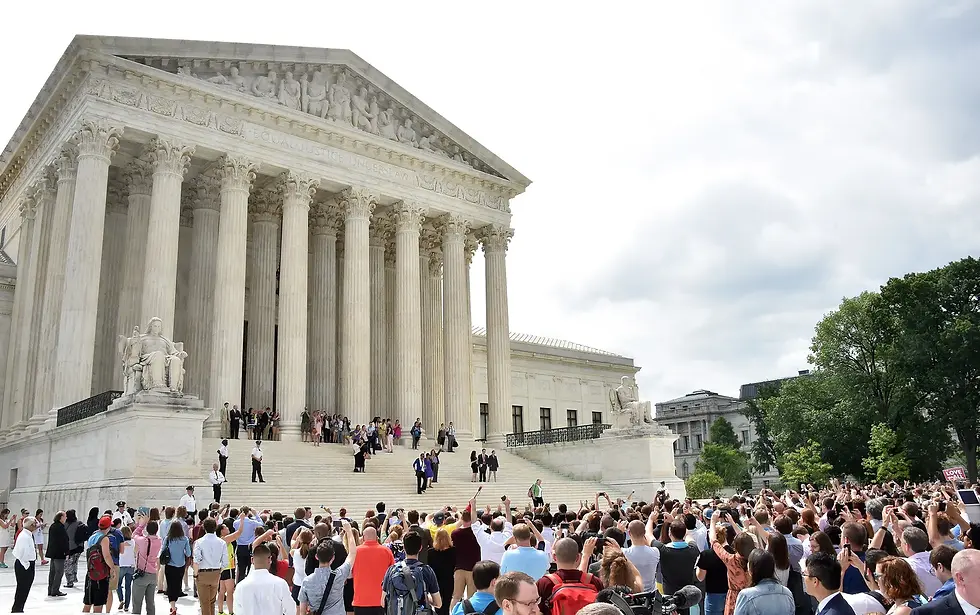
Federalism Cases to Watch in OT 26
Towards the end of their yearly term, the Supreme Court also grants certiorari to a number of cases it will hear starting in October. Below, we have included a few federalism-related cases that we will have our eyes and ears on in the future. More cases will likely be granted after the Justices return from the summer break. Those cases will be posted here.
Facts: Colorado operates a universal preschool program that pays for families to send their children to the preschool of their choice, public or private. Schools wanting to participate must ensure all families have an equal opportunity to enroll regardless of race, religious affiliation, gender identity, etc. Nevertheless, Colorado permits numerous exemptions to this requirement, allowing preschools to admit only “children of color,” “gender-nonconforming children,” and low-income families. But the law excludes Catholic preschools because they admit only families who support Catholic beliefs. The Supreme Court will seek to address a circuit split on the issue of secular exemptions and discretion and if these undermine the general applicability rule under Employment Division v. Smith.
Question Presented: Whether proving a lack of general applicability under Employment Division v. Smith requires showing unfettered discretion or categorical exemptions for identical secular conduct.
Facts: The Natural Gas Act allows private companies to condemn land to build natural gas infrastructure, but says nothing about how to determine the amount of just compensation owed for the property taken. Certain circuit courts have determined the amount under state law, which often sets a higher compensation than federal law, but other circuit courts have held that the Natural Gas Act permits only the constitutional minimum of compensation required by the Fifth Amendment.
Question Presented: In private condemnations under the Natural Gas Act, should just compensation be determined by reference to state law?
Facts: Boulder County sued Exxon and Suncor under Colorado tort law, claiming the companies’ nationwide and global fossil-fuel activities and alleged decades of misleading climate messaging contributed to greenhouse-gas emissions that produced local harms in Boulder. Although the emissions originate interstate and internationally, Boulder seeks state-law damages for injuries felt within Colorado. The Supreme Court will decide whether federal law bars states from using their own tort remedies to address these locally experienced climate impacts.
Question Presented: Whether federal law precludes state-law claims seeking relief for injuries allegedly caused by the effects of interstate and international greenhouse-gas emissions on the global climate.
Facts: Runaway minors in the state of Washington are permitted to receive gender affirming treatment without parental notice or consent. Parents of such minors sued the applicable state laws, alleging current harms and a substantial risk of future harm to their ability to parent. However, the Ninth Circuit held that Petitioners lacked Article III standing.
Question Presented: Whether parents have standing to challenge a law or policy that deliberately displaces their decision-making role as to “gender transitions” of their children, and in so doing creates present and likely future impediments to their ability to parent their children as they deem best for them.
Facts: Arizona, like every other State, permits only U.S. citizens to vote in federal elections. To enforce this qualification, Arizona requires every applicant who registers to vote to produce “satisfactory evidence of citizenship.” If the information received is not satisfactory, the state will cancel the registration. The Ninth Circuit held that the National Voter Registration Act preempts those provisions of Arizona law.
Question Presented: Does the National Voter Registration Act or a federal consent decree prohibit Arizona from requiring voter-registration applicants to produce “satisfactory evidence” of U.S. citizenship when registering with a state registration form?
What did we miss? What else should we be looking at in our next review? Reach out, and let us know!


Comments